

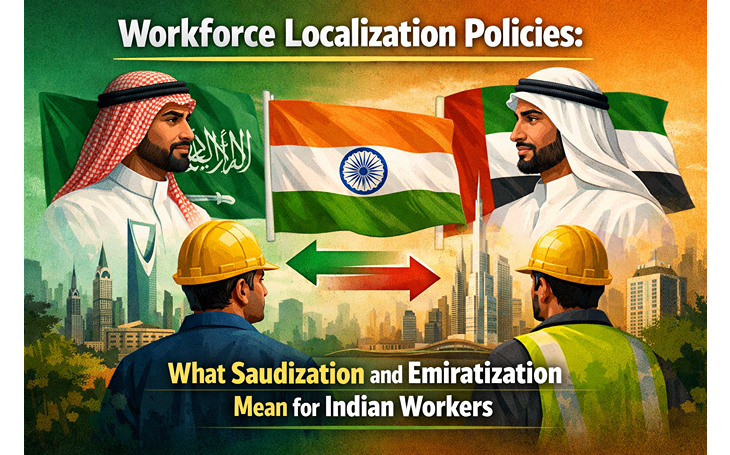
Workforce Localization Policies: What Saudization and Emiratization Mean for Indian Workers
Several countries in the Gulf have introduced workforce localization programs. The most well known are Saudization in Saudi Arabia and Emiratization in the UAE. These policies aim to increase the number of local citizens working in private sector roles that were traditionally filled by expatriates. While the goal is national development, these changes also influence hiring trends for overseas workers, including those from India.
Understanding these policies helps jobseekers prepare better and helps employers plan workforce strategies that stay compliant with local rules.
What Are Localization Policies
Localization policies encourage companies to hire a fixed percentage of local citizens. To meet these guidelines, companies must reduce dependency on foreign workers in certain roles or sectors. This affects recruitment patterns across industries like retail, administration, hospitality, customer service and some technical fields.
While not all roles are restricted, the policies push companies to balance their workforce between citizens and expatriates.
How Saudization Works
Saudi Arabia’s Nitaqat program classifies companies into different categories based on the number of Saudi nationals they employ. Higher grades are awarded to companies with stronger participation in localization. This impacts:
• visa approvals
• hiring permissions
• company rankings
• access to government services
Sectors like sales, administration and HR have seen high localization rates, which reduces openings for expatriates in those specific roles. However, technical trades, project based jobs and high skill positions still depend heavily on foreign manpower.
How Emiratization Works
The UAE is implementing Emiratization across both public and private sectors. Companies must meet certain quotas by hiring UAE nationals, especially in office based or customer facing jobs.
The private sector now follows structured targets that encourage local participation. Like Saudi Arabia, the UAE still requires expatriate manpower for construction, facility management, engineering, oil and gas services and large infrastructure projects.
Impact on Indian Workers
Localization does not remove the demand for Indian workers. Instead, it redistributes roles and shifts recruitment patterns. Here is how it affects Indian jobseekers:
• Reduced vacancies in administrative and junior office roles
Roles like receptionist, clerk, customer service and similar desk jobs now have limited openings.
• Stable demand for skilled and semi skilled workers
Trades like electrical, HVAC, plumbing, fabrication, welding, carpentry and machine operation continue to see high demand.
• Growth in project based hiring
Mega projects need manpower for defined periods. These roles remain largely open to expatriates.
• Need for certified and trained workers
Countries now prefer workers who bring strong skills and documented expertise. Certifications help candidates stand out.
• Fresh opportunities in sectors not covered by localization
Healthcare, logistics, facility management and industrial operations still rely heavily on Indian manpower.
How Employers Are Adapting
Companies in GCC nations are restructuring their recruitment models. Instead of reducing overall hiring, many are shifting to:
• specialized manpower
• contract staffing
• project based roles
• high skill technical jobs
• temporary assignments
This creates new opportunities for Indian workers who are trained in specific trades.
How Recruitment Agencies Identify Alternative Markets
Professional recruitment partners study global hiring trends to find markets where skilled workers are needed. Even as localization increases in the GCC, many other regions continue to expand their hiring.
Recruitment agencies help workers explore:
• emerging markets in Eastern Europe
• large scale projects in Africa
• manufacturing hubs in Southeast Asia
• expansion projects in the Middle East outside localization heavy sectors
By tracking global infrastructure developments, agencies can guide workers toward stable and sustainable opportunities.
Why Skilled Workers Still Have Strong Demand
Localization programs mainly target office roles. Technical and labour intensive industries depend on talent that is not always available locally. As long as global development continues, Indian tradesmen and technicians will remain essential.
Countries need workers who are trained, disciplined and experienced. Indian workers fit that requirement well, especially in construction, oil and gas, manufacturing, mechanical maintenance and facility operations.
Conclusion
Workforce localization policies like Saudization and Emiratization are reshaping the job landscape across the Gulf. However, they do not close doors for Indian manpower. Instead, they shift priorities and encourage workers to upgrade skills, earn certifications and focus on trades that are consistently in demand.
With the right guidance and understanding of market trends, Indian workers can continue to find strong overseas opportunities in many growing regions.
Get more insights on
GILS Pvt Ltd
.
Check us out on
LinkedIn
.