
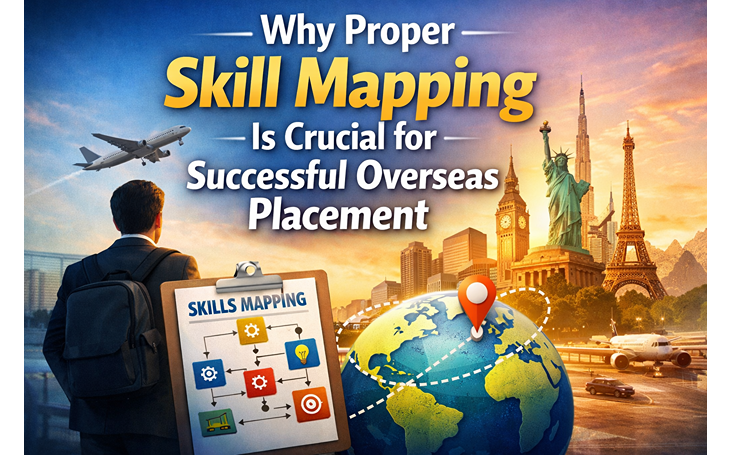
Why Proper Skill Mapping Is Crucial for Successful Overseas Placement
Finding the right job for the right person sounds simple, but in overseas recruitment it is one of the most challenging and most important steps. When workers are placed based on true strengths, productivity rises, job satisfaction increases and employers see long-term stability. This is where proper skill mapping becomes essential.
Skill mapping helps evaluate what a worker can do, what experience they hold, and which role matches their capabilities. For international hiring, this step decides whether a worker performs well abroad or struggles with tasks they are not familiar with. As global projects become more demanding, employers prefer workers who are correctly aligned to job requirements.
What Is Skill Mapping?
Skill mapping is the process of assessing a worker’s technical skills, hands-on experience, certifications, language ability and work habits. It helps recruitment teams understand:
◾ strengths
◾ limitations
◾ ideal job categories
◾ training needs
◾ suitability for specific industries
A clear skills profile ensures workers are placed where they can succeed without unnecessary stress or mismatch.
Why Skill Mapping Matters in Overseas Placement
International roles often have strict safety rules, productivity targets and job standards. Workers who are placed without proper assessment may face difficulties adapting. Skill mapping prevents such problems by improving placement accuracy.
Here are the key reasons it is crucial:
1. Ensures Accurate Role Matching
A helper with limited experience should not be placed as a technician. A rigger who has only worked with light loads should not be assigned to heavy lifting tasks. Skill mapping checks job history, hands-on ability and certifications before recommending a role.
This avoids wrong placements that could affect both employers and workers.
2. Improves Worker Confidence and Performance
When workers are assigned to jobs they are familiar with, they perform faster and with more confidence. They understand tools, procedures and daily tasks. This leads to:
◾ better quality work
◾ fewer mistakes
◾ stronger productivity
◾ faster adaptation
Workers who feel confident also settle abroad more comfortably.
3. Reduces Rejection During Client Trade Tests
Most overseas employers conduct trade tests before selection. Skill-mapped candidates know what to expect and match the required standards. This increases:
◾ pass rates
◾ client satisfaction
◾ faster hiring cycles
◾ reduced dropout rates
Recruiters avoid sending unprepared or unsuitable candidates, saving time and cost for everyone.
4. Enhances Workplace Safety
Safety-sensitive roles such as scaffolding, rigging, electrical and mechanical work require verified skills. A mismatch can risk accidents. Skill mapping ensures only qualified workers are recommended for technical positions.
This protects:
◾ the worker’s safety
◾ the employer’s site standards
◾ long-term job stability
5. Supports Fair Wages and Better Career Growth
Employees placed according to accurate skills get fair wages and the chance to grow. For example:
◾ certified welders earn more than helpers
◾ experienced fabricators receive skilled-grade salaries
◾ trained HVAC technicians can advance to senior roles
Skill mapping helps workers avoid underpaid placements.
6. Helps Employers Build Reliable Teams
For mega-projects, factories, oil and gas sites or long-term maintenance contracts, employers need dependable talent. Skill mapping helps recruitment agencies present workers who truly fit the job. This builds trust and long-term partnerships.
How GILS Uses Skill Mapping to Improve Overseas Recruitment
GILS Pvt Ltd
follows a structured skill-mapping approach to help employers get accurate talent and ensure workers have suitable placements. This includes:
◾ detailed skill assessments
◾ trade-wise candidate screening
◾ verification of past work experience
◾ evaluating certifications and training
◾ live or recorded trade test checks
◾ communication and behaviour evaluation
This process results in better job matches and higher satisfaction for both sides.
Conclusion
Skill mapping is the backbone of successful overseas recruitment. When workers are matched to roles based on their real abilities, everyone benefits. Employers get productive teams and workers get roles that align with their strengths. With proper assessment and guidance, overseas placements become smoother, safer and more rewarding.
Check us out on
LinkedIn
.