

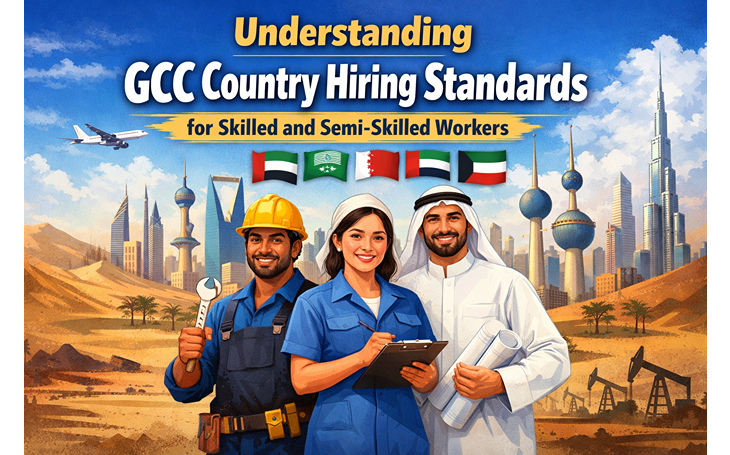
Understanding GCC Country Hiring Standards for Skilled and Semi-Skilled Workers
The Gulf region continues to be a leading destination for Indian manpower. Countries such as Saudi Arabia, UAE, Qatar, Oman, Kuwait and Bahrain have strong demand for skilled and semi-skilled workers across construction, oil and gas, facility management, hospitality, logistics and manufacturing.
While the opportunities are high, each GCC country follows strict hiring standards that candidates must meet before deployment. Understanding these requirements helps minimize delays and ensures a smooth recruitment and mobilization process.
Why GCC Hiring Standards Matter
GCC countries maintain structured labor systems to ensure worker safety, productivity and legal compliance. These standards cover medical tests, skill verification, documentation, background checks and employer obligations.
For candidates, meeting these standards increases their chances of selection and successful placement. For recruiters and employers, it ensures a workforce that is reliable, healthy and job-ready.
Saudi Arabia: Focus on Certification and Medical Fitness
Saudi Arabia is one of the largest recruiters of Indian manpower. The country requires:
◾ GAMCA or approved medical fitness tests
◾ verification of trade certificates for technical roles
◾ background checks for sensitive job categories
◾ compliance with Saudi Labor Law
◾ vaccination requirements depending on the job site
Saudi Arabia also follows the WPS salary system and strict contract guidelines, making transparency an important part of the hiring process.
United Arab Emirates: Skill-Based Hiring and Clear Contract Rules
The UAE places high value on skilled trades and professional training. Recruitment standards include:
◾ skill tests for electricians, plumbers, HVAC technicians, drivers and machine operators
◾ Emirates ID and e-contract processing
◾ medical clearance from UAE-approved centers
◾ adherence to UAE employment visa procedures
The UAE also has one of the most organized onboarding systems, which ensures workers receive clear information about their roles, accommodation and benefits.
Qatar: Demand for Infrastructure and Hospitality Talent
Qatar continues to hire Indian manpower for construction, facility management, hotels and general services. Common hiring requirements include:
◾ medical tests under the Qatar Medical Board system
◾ police clearance if requested by the employer
◾ trade tests for technical roles
◾ Qatar ID and contract authentication
Qatar’s labor reforms have improved working conditions, which has increased opportunities for both skilled and semi-skilled workers.
Oman: Preference for Experience and Verified Documentation
Oman focuses on hiring workers with stable experience and clean records. Key requirements include:
◾ verified work experience for skilled categories
◾ medical tests through authorized centers
◾ proper attestation of certificates
◾ compliance with Oman work visa regulations
Oman values disciplined and trained manpower for industries such as maintenance, oil and gas support, logistics and construction.
Kuwait: Structured Visa Process and Trade Tests
Kuwait has a consistent demand for electricians, carpenters, plumbers, mechanics, helpers and cleaners. Standards include:
◾ Kuwait medical tests
◾ trade tests depending on the role
◾ clear employment contracts
◾ visa stamping through the Kuwait Embassy
Employers in Kuwait often prefer candidates with GCC experience, especially for technical roles.
Bahrain: Transparent Hiring and Skill Verification
Bahrain is known for its straightforward recruitment process. Requirements include:
◾ basic skill tests for technical and semi-technical roles
◾ routine medical fitness
◾ documentation verification
◾ employment contracts approved by Bahrain LMRA
Bahrain’s industries often hire workers for facility management, retail, cleaning, hospitality and maintenance.
Common Trends Across GCC Countries
While each country has individual rules, some expectations are the same across the Gulf:
◾ medical fitness is mandatory for all workers
◾ skill tests help employers ensure job readiness
◾ passport validity should be at least six months
◾ workers must understand contract terms before travel
◾ adherence to labor laws is critical for both employers and candidates
These standards help maintain workplace safety and improve the quality of manpower deployed across GCC projects.
The Importance of Compliance in GCC Recruitment
Meeting GCC hiring standards is essential for avoiding delays or visa rejections. A structured recruitment and mobilization process ensures that workers arrive prepared and confident. It also builds trust with employers who depend on reliable talent to keep their operations running smoothly. Get more insights on
GILS Pvt Ltd
.
As demand for Indian manpower continues to grow, understanding these country-specific requirements becomes even more important for candidates and recruiters alike.
Check us out on
LinkedIn
.