
Understanding Employer of Record and International Staffing Models
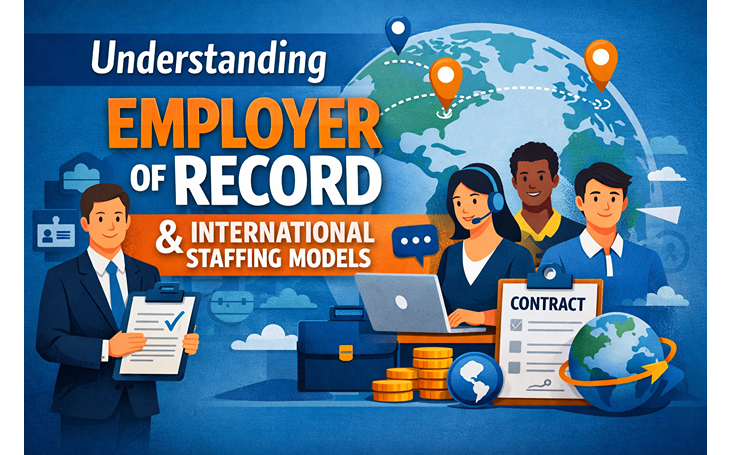
Hiring talent across borders is no longer limited to large corporations. Today, mid-size enterprises, contractors and project-based companies also depend on international staffing. The challenge is that every country has different labour rules, payroll systems, visas and compliance standards. To manage this complexity, businesses use structured hiring models such as Employer of Record, Professional Employer Organization, manpower supply and contract staffing.
Understanding these models helps employers choose the right approach for their needs and helps workers know what to expect.
Employer of Record (EOR): Simple Hiring Without Setting Up a Legal Entity
An Employer of Record is a third-party company that becomes the legal employer of international workers on behalf of the client. The client controls the work and project outcomes. The EOR handles onboarding, payroll, visas, tax filings, insurance and local labour compliance.
This model is useful for companies expanding into new markets or running short-term projects where setting up a local office is costly and slow.
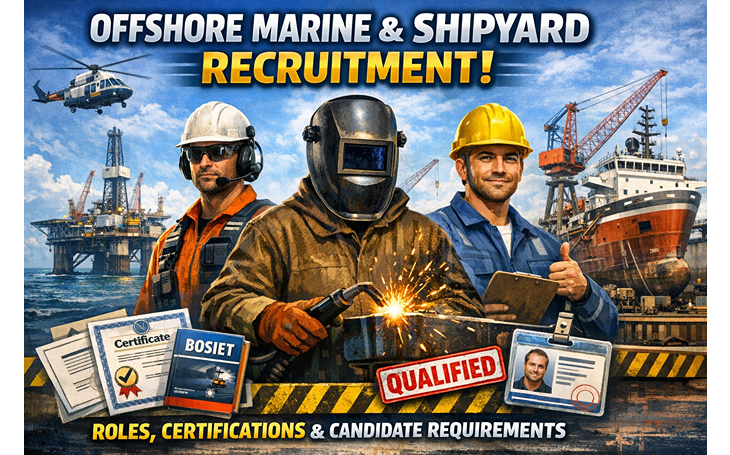
With an EOR, a company can hire a foreign welder, nurse or technician without dealing with government registrations or local employment laws. The worker gets legally recognized employment, proper benefits and a clear contract. The client enjoys a faster hiring process and reduced risk.
Professional Employer Organization (PEO): Co-Employment for Established Businesses
A PEO is a shared employment model. The company and the PEO both have responsibilities. The company manages daily work and performance. The PEO manages HR, payroll and compliance.
This model suits companies that already operate in a country but need HR support. It is common in large projects and multi-country operations where HR administration becomes heavy.
For example, a construction firm may have managers and engineers in the Gulf but want payroll management handled by a trusted partner. The PEO keeps the HR process standardized while the company focuses on operations.
Manpower Supply: Deployment for Specific Roles and Durations
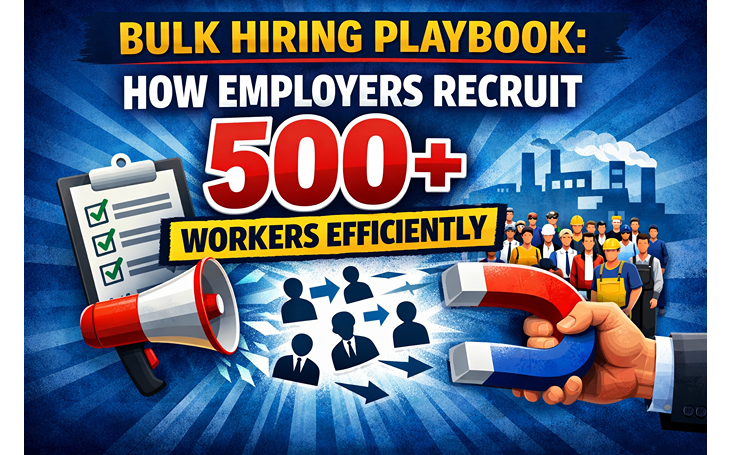
Manpower supply companies recruit and deploy workers directly for a client. The workers are hired by the agency and assigned to a project. This is common in oil and gas, facility management, hospitality and infrastructure work where large numbers of workers are needed quickly.
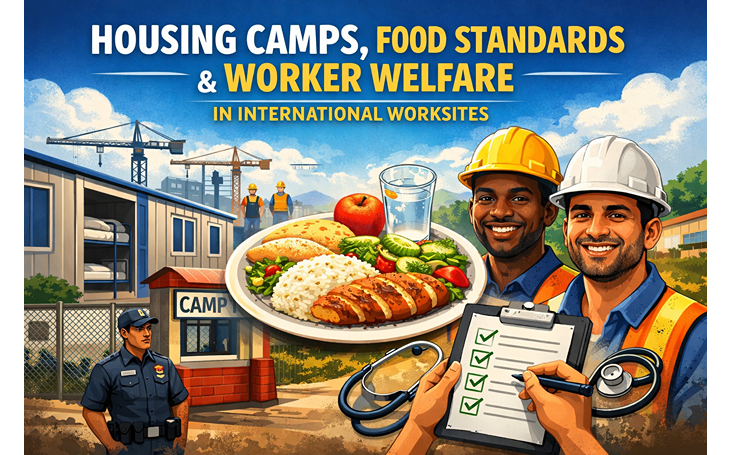
The manpower supply model is flexible. It covers skilled and semi-skilled roles. Workers receive wages, accommodation, safety gear and other benefits as per contract. The client receives a ready workforce without handling recruitment or onboarding.
Companies often use manpower supply during peak project phases or when they must scale teams fast.
Contract Staffing: Skill-Based Hiring for Fixed Timeframes
Contract staffing focuses on delivering talent for a defined period. Instead of full employment, workers are hired for a project phase or specific task.
It is widely used in manufacturing, maintenance and engineering. Employers get the skill they need without long-term commitments. Workers can move from one contract to another, gaining experience and improving earnings.
The key difference between manpower supply and contract staffing is ownership of labour. In manpower supply, the agency employs workers. In contract staffing, workers may be hired on short-term contracts directly by the client or through a staffing partner.
How Companies Choose the Right Staffing Model
Each staffing model works best in different conditions.
EOR is ideal when:
◾ You want to hire internationally without establishing a legal company
◾ You need compliance coverage and risk reduction
◾ You want fast onboarding across borders
PEO is ideal when:
◾ You already operate in a country
◾ You want to offload HR, payroll and admin
◾ You want to maintain long-term employee relationships
Manpower supply works when:
◾ You need a workforce of technicians, helpers or tradesmen
◾ You want project-based deployment with all logistics handled
◾ You need quick replacement, scaling and mobilization
Contract staffing is best when:
◾ The job is time-bound or seasonal
◾ Specialized skills are needed for specific tasks
◾ You want to run lean based on project delivery cycles
Where GILS Fits In
GILS Pvt Ltd
works across these models depending on client requirements. For high-volume mobilization, manpower supply is often the fastest solution. For international clients with no legal presence in India or target markets, EOR simplifies hiring and compliance. For ongoing projects and skill-based hiring, contract staffing helps balance cost and productivity.
The goal is not to push one model over another. The goal is to match workforce strategy with business needs, legal requirements and project timelines.
Final Thoughts
Choosing the right staffing model is not only a legal decision. It impacts worker satisfaction, project efficiency and long-term growth. EOR, PEO, manpower supply and contract staffing each offer their own advantages. When businesses understand them clearly, they hire better, manage risk and retain talent more effectively.
Check us out on
LinkedIn
.