
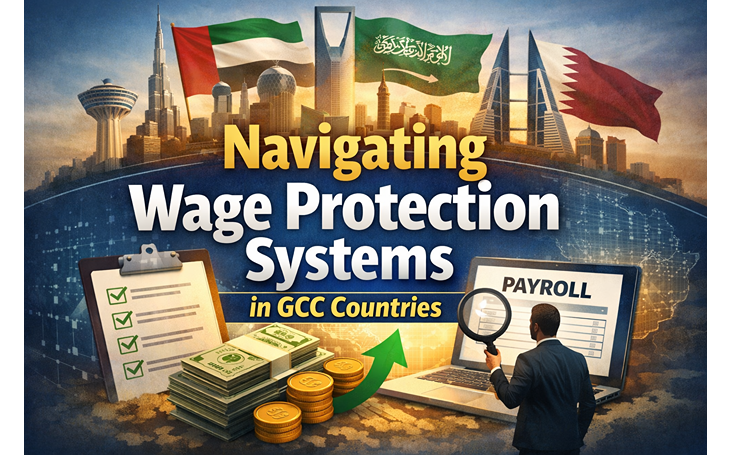
Navigating Wage Protection Systems in GCC Countries
Managing salaries for overseas workers is one of the most important responsibilities for any employer operating in GCC nations. To make wage payments transparent and secure, countries across the region use a unified Wage Protection System. The WPS keeps worker payments on record, ensures timely salary deposits and prevents practices that may harm workers or expose employers to penalties.
For companies hiring skilled and semi-skilled workers for construction, factories, events and oil and gas projects, understanding the Wage Protection System is essential. It not only protects workers but also keeps employers compliant with local labour laws.
What Is the Wage Protection System
The WPS is an electronic salary transfer platform monitored by labour authorities in GCC countries. It ensures that companies pay workers on time, in full and through approved banking channels. Every salary transaction is recorded to prevent disputes or salary delays.
Most GCC nations, including the UAE, Saudi Arabia, Qatar, Kuwait, Oman and Bahrain, use their own versions of WPS with strict reporting rules.
Why WPS Matters for Overseas Workers
Workers travel abroad with the expectation of stable income and safe working conditions. The WPS protects them by ensuring their wages are:
◾ paid on time
◾ transferred to verified bank accounts
◾ recorded for future reference
◾ protected from unauthorized deductions
This system gives workers confidence that their salaries are managed properly and reduces misunderstandings at the worksite.
Employer Responsibilities Under WPS
GCC countries expect employers to meet specific payroll requirements. Failure to follow these rules can lead to fines, license suspension or restrictions on hiring new employees.
Typical employer obligations include:
◾ registering with the Wage Protection System
◾ submitting monthly payroll files
◾ paying workers through approved banks or exchanges
◾ avoiding delayed or incomplete payments
◾ maintaining accurate employee records
◾ following contract terms agreed during recruitment
For large projects, these processes help maintain consistency in payroll management across hundreds or thousands of workers.
How WPS Strengthens Recruitment and Project Stability
A smooth wage transfer system supports project timelines and maintains worker satisfaction. When workers receive timely and transparent payments, they stay motivated and committed to long-term roles.
Benefits for employers include:
◾ fewer disputes or complaints
◾ improved productivity
◾ better compliance during audits
◾ higher worker retention
◾ stronger reputation in the region
With WPS in place, companies can focus on operations instead of navigating salary-related issues.
WPS Variations Across GCC Countries
While the basic purpose remains the same, each GCC nation has its own guidelines:
UAE: One of the earliest adopters, the UAE requires monthly salary uploads and strict tracking of payment delays.
Saudi Arabia: Uses a structured wage monitoring system linked to its labour platform, ensuring that worker dues match contract records.
Qatar: Mandates monthly WPS files with immediate penalties for delayed or partial payments.
Kuwait, Oman and Bahrain: Follow similar systems with mandatory monthly wage reports, bank transfers and rules for dispute resolution.
Understanding these differences helps employers plan their payroll strategy more effectively.
How GILS Supports Employers and Workers With WPS Requirements
GILS Pvt Ltd
helps clients navigate payroll documentation and compliance expectations during overseas recruitment. While payment is handled directly by employers in the GCC, proper documentation during recruitment is essential to avoid contract mismatches later.
Support steps include:
◾ clear communication of salary structures to workers
◾ verification of contract details before deployment
◾ guidance on country-specific labour rules
◾ ensuring worker records match employer submissions
◾ preventing errors that may lead to WPS violations
This clarity ensures that workers understand their wages and benefits before they travel, reducing confusion after joining the job.
WPS Builds Trust in Overseas Hiring
The Wage Protection System has changed the recruitment landscape in GCC countries. It encourages transparency, protects workers and ensures employers maintain high payroll standards. For companies and workers alike, WPS creates stability and trust, which are essential for long-term overseas employment.
Check us out on
LinkedIn
.