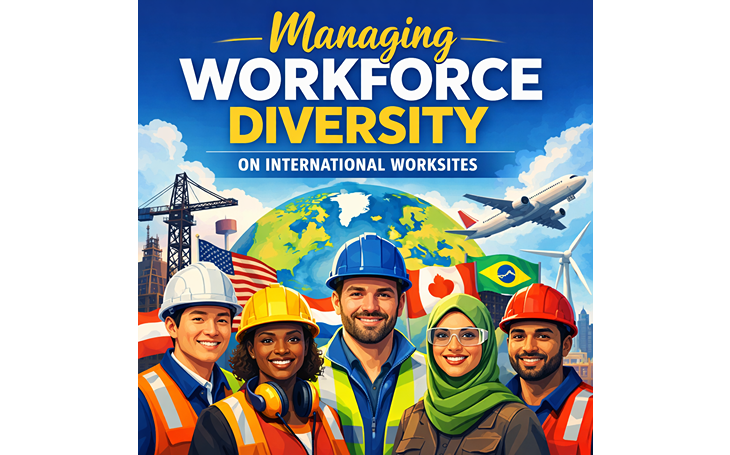
Managing Workforce Diversity on International Worksites
Global projects bring together workers from different countries, cultures and backgrounds. Construction sites in the Gulf, factories in Europe and large-scale engineering projects across Asia often rely on multicultural teams. Diversity is more than a buzzword. It is the foundation of how modern international workplaces operate. The ability to cooperate across language, skill and cultural barriers becomes a business advantage.
Indian workers have become valuable contributors in these environments. Their adaptability, technical strengths and willingness to collaborate help employers create stable and productive teams.
What Makes Workforce Diversity Important
Diverse teams bring varied experience and ideas to the workplace. A group of technicians from India, Nepal, Philippines and Africa will not approach the same task in the same way. Their work styles, problem-solving methods and communication patterns make teams stronger when managed well.
On large international projects, diversity reduces dependency on a single labour market. Employers gain access to a broader talent pool. They also build resilience against shortages, regional disruptions and policy changes. This is especially important in oil and gas, energy, infrastructure and facility management where timelines are tight and staffing needs fluctuate.
Why Indian Workers Excel in Multicultural Teams
Indian workers are already accustomed to language and cultural variety inside their own country. They often interact with teammates speaking different mother tongues and dialects. Many Indian tradesmen and technicians also learn English during training or on the job. This gives them an advantage when working with multinational supervisors.
Indian culture values respect, hierarchy and team harmony. On foreign job sites, Indian workers tend to follow instructions, coordinate tasks and accept structured leadership. This makes them reliable team members for supervisors and project managers. Their familiarity with diverse environments helps them adjust quickly and avoid conflict.
Workers from India are also known for their willingness to learn. Whether it is a new machine, safety procedure or software, they integrate updates into their workflow without resistance. This flexibility becomes crucial when working alongside engineers and technicians from different countries.
Managing Diversity on Foreign Worksites
Strong multicultural teams do not form automatically. They require planning, communication and leadership. Employers use several methods to manage diversity effectively.
◾ Clear Communication
Instructions must be simple and consistent. Visual signage, multilingual safety boards and short briefing meetings help workers understand expectations. Supervisors who encourage questions build trust and reduce mistakes.
◾ Respecting Cultural Norms
Workers should feel comfortable expressing themselves. Employers may include prayer rooms, neutral meal options and flexible break schedules. These small steps increase morale and reduce friction between groups.
◾ Role Clarity
Every worker must know what their responsibility is. When a scaffolder understands the duties of a rigger or electrician, cooperation becomes smoother. Clear roles prevent blame and confusion.
◾ Training and Mentorship
On mixed job sites, experienced workers support newcomers. Training sessions also unify standards. A welder from India and a welder from Egypt should follow the same procedure. This consistency improves quality and safety.
How Indian Workers Strengthen Team Dynamics
Indian manpower is known for discipline and patience. These qualities help maintain balance in multicultural worksites. Indian workers rarely impose their own style of work on others. Instead, they observe, adjust and align. This allows teams to form strong working rhythms.
In many industries, Indian workers take on support roles that bridge communication gaps. A bilingual Indian technician may translate instructions, assist documentation or coordinate equipment usage. These informal skills are often more valuable than technical certification alone.
The Role of Ethical Recruitment Agencies
A workforce thrives when recruitment is transparent and fair. Agencies like
GILS Pvt Ltd
focus on preparing candidates not only for technical tasks but also for cultural realities. Workers are briefed on company expectations, site rules and behaviour standards. This preparation reduces culture shock and helps them integrate faster.
Employers benefit because they receive teams that understand how international worksites operate. Workers benefit because they start their overseas journey with clarity and confidence.
Final Thoughts
Managing workforce diversity requires patience, active leadership and respect for differences. Indian workers play a key role in building these environments. Their ability to adapt, collaborate and work within structured systems makes them strong assets for global projects.
International recruitment is no longer just about filling vacancies. It is about building teams that can work together, grow together and deliver results in demanding environments.
Check us out on
LinkedIn
.