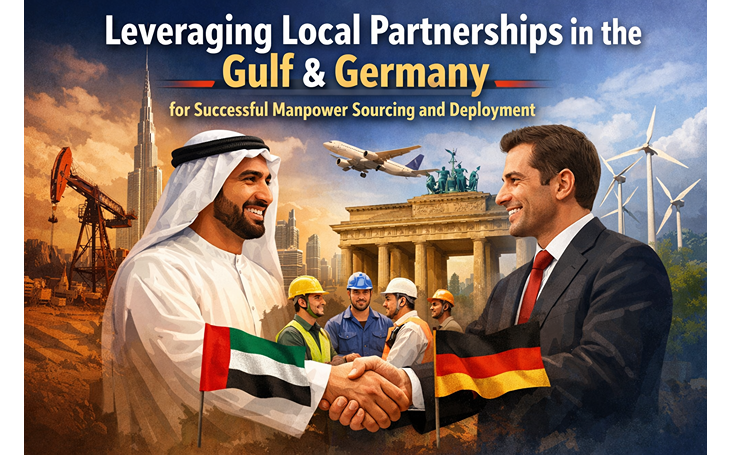
Leveraging Local Partnerships in the Gulf & Germany for Successful Manpower Sourcing and Deployment
As global infrastructure, manufacturing, and energy projects accelerate, the demand for skilled and semi-skilled labour is intensifying across both the Gulf region and Europe, especially Germany. Employers need reliable talent; candidates seek genuine overseas jobs; and recruitment agencies face the challenge of bridging these two worlds efficiently and ethically.
In such a dynamic environment, one factor consistently determines success: local partnerships.
Whether in Dubai, Doha, or Düsseldorf, collaboration with trusted on-ground entities, training centres, regulatory experts, or project partners can dramatically improve the speed, quality, and sustainability of manpower deployment.
This article explores how leveraging local partnerships in the Gulf and Germany helps overseas recruitment consultants and employers achieve greater efficiency, compliance, and long-term impact.
1. The Strategic Value of Local Partnerships
In the world of overseas recruitment, success doesn’t end with sourcing; it extends to deployment, integration, and retention. Each of these stages involves local regulations, cultural nuances, and logistical challenges.
Forming partnerships with local recruitment agencies, training providers, and compliance specialists ensures that every step from candidate arrival to job placement is handled with precision.
The benefits include:
◾ Faster visa and documentation processing.
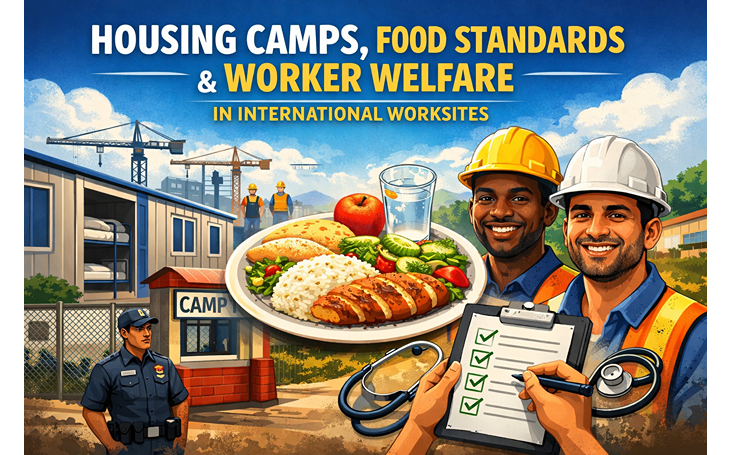
◾ On-ground support for housing, medicals, and orientation.
◾ Access to region-specific knowledge and networks.
◾ Improved worker welfare and client satisfaction.
Simply put, local partnerships convert recruitment from a one-time transaction into a sustainable employment ecosystem.
2. Why Partnerships Matter in the Gulf
The Gulf Cooperation Council (GCC) countries – UAE, Saudi Arabia, Qatar, Oman, Bahrain, and Kuwait remain some of the world’s largest importers of blue-collar labour. Mega-projects in construction, oil & gas, logistics, and infrastructure are driving continuous demand for skilled manpower.
However, the regulatory frameworks and cultural expectations in each country differ. Here’s where local alliances make the difference:
a) Navigating Local Labor Laws
Each GCC country has its own labour, visa, and sponsorship systems. Partnering with licensed local entities helps ensure every manpower deployment is compliant with host-country regulations, preventing legal or reputational risks.
b) Streamlined Onboarding and Welfare
Local partners assist in arranging accommodation, safety induction, and grievance redressal. This improves worker satisfaction, which is critical for long-term retention and productivity.
c) Faster Project Mobilization
For large infrastructure or oilfield projects, time is crucial. Local partners simplify documentation, medicals, and site-access requirements, enabling employers to deploy teams rapidly.
For example, in blue-collar jobs in Dubai, a strong partnership with UAE-based manpower service providers ensures smooth visa processing and adherence to Emirates Labour Law, which is vital for both contractors and clients.
3. Why Partnerships Are Critical in Germany
Germany represents a very different, but equally promising, market for Indian recruitment firms. Facing an acute labour shortage, especially in construction, logistics, metalwork, and engineering, German employers increasingly rely on overseas recruitment agencies for skilled manpower.
However, success in Europe requires more than just sourcing; it requires integration. Local partnerships play a central role in helping overseas workers adapt to Germany’s cultural, legal, and operational environment.
a) Compliance with EU Labor Standards
Partnering with certified German HR agencies or immigration specialists ensures that all employment contracts, permits, and wage structures comply with EU law.
b) Language and Cultural Orientation
Local training institutes can help provide language preparation (German A1/A2) and cultural onboarding, significantly improving communication and job performance.
c) Worker Support and Retention
By collaborating with on-ground service providers, overseas recruitment consultants can ensure continuous welfare monitoring, reducing attrition and improving employer satisfaction.
Through such collaborations, agencies like GILS Pvt Ltd can deliver far more than recruitment; they deliver complete international employment services that are compliant, human-centred, and future-ready.
4. Building Win-Win Collaboration Models
To make local partnerships effective, both sides, overseas recruiters and host-country partners, must define shared goals and responsibilities.
A few proven collaboration models include:
a) Licensing and Representation
Recruitment agencies can form official tie-ups with licensed partners in Gulf or European countries, allowing smoother visa handling, project coordination, and payroll management.
b) Training and Skill Certification Alliances
By partnering with local technical institutes, Indian agencies can offer pre-departure skill verification that meets host-country standards, ensuring workers are job-ready from day one.
c) Welfare and Compliance Networks
Some partnerships are centred on worker welfare, ensuring proper housing, health insurance, and grievance support for employees abroad – key factors for ethical and sustainable recruitment.
These alliances transform overseas recruitment services from simple manpower supply into integrated workforce management solutions.
5. Technology: The Bridge Between Partners
Digital tools have made cross-border collaboration easier than ever. Agencies now use cloud-based systems to synchronize candidate data, deployment schedules, and client updates across time zones.
Examples include:
◾ Digital onboarding platforms for managing pre-deployment documentation.
◾ Real-time dashboards showing deployment progress and worker locations.
◾ AI-based matching tools that pair candidate profiles with job openings in Germany or the Gulf.
This level of transparency and coordination strengthens trust between overseas recruitment consultants, local partners, and employers, creating a seamless global talent pipeline.
6. How GILS Pvt Ltd Builds Global Alliances
At GILS Pvt Ltd, we believe collaboration is the backbone of sustainable growth in the international recruitment industry.
Our approach to overseas recruitment is built on three pillars:
1.Ethical Partnerships: We work only with licensed, vetted, and compliant partners across the Gulf and Europe.
2.Training Integration: Through certified training alliances, we ensure every worker we deploy meets the skill standards required by German and GCC employers.
3.Digital Synergy: Our technology-driven systems allow partners and clients to track recruitment, documentation, and manpower deployment in real time.
By combining local insight with global capability, we ensure successful project delivery and long-term workforce stability.
7. The Broader Impact: Building Bridges, Not Just Teams
Strategic partnerships aren’t just operational tools; they’re bridges between cultures, economies, and people.
Every collaboration brings together Indian expertise, Gulf opportunity, and European precision, creating a workforce ecosystem based on trust, transparency, and shared success.
Through responsible alliances, the recruitment industry can deliver something greater than jobs; it can deliver dignity, stability, and opportunity across borders.
Conclusion
In today’s global labour market, the strength of a recruitment agency lies not only in its sourcing network but also in its local partnerships.
In both the Gulf and Germany, working with trusted in-country allies ensures compliance, accelerates deployment, and elevates worker welfare, three essentials of successful international recruitment.
For employers seeking a dependable partner for overseas recruitment services or international employment services and for workers aspiring to secure jobs abroad with confidence,
GILS Pvt Ltd
offers a bridge built on integrity, expertise, and collaboration.
Together, we connect nations, one skilled worker at a time.
Check us out on
LinkedIn
.