

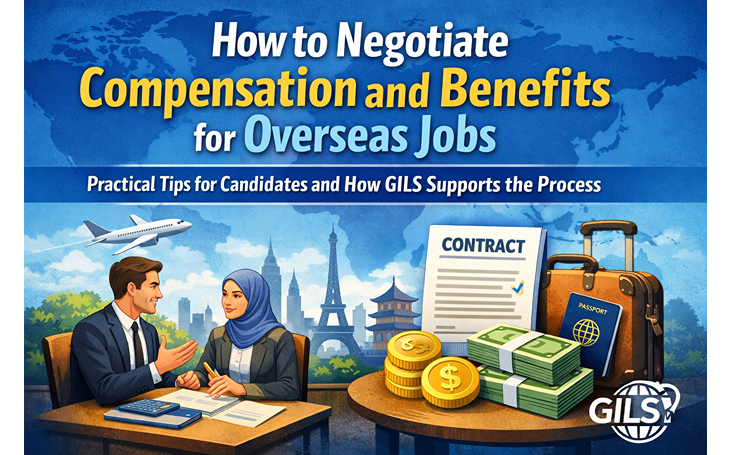
How to Negotiate Compensation and Benefits for Overseas Jobs : Practical Tips for Candidates and How GILS Supports the Process
Securing an overseas job can open doors to a better income, global exposure, and long term career growth. But before accepting an offer, candidates must understand how to negotiate pay and benefits. Many jobseekers hesitate to negotiate because they fear losing the opportunity, but when done correctly, negotiation shows confidence and awareness of industry standards.
With the right approach and proper guidance from a trusted recruitment partner like GILS Pvt Ltd, candidates can secure fair compensation that matches their skills, experience, and responsibilities. Here is a clear and practical guide on how to negotiate overseas job offers.
1. Understand the Market Salary for Your Role
Before negotiation, you must know the standard salary range for your job category in the destination country. Technician roles, hospitality jobs, construction trades, and operators all have different pay scales depending on region, demand, and skill level.
How to prepare:
◾ Check average salary data for your trade
◾ Compare pay across nearby countries
◾ Consider living costs, working hours, and overtime rules
How GILS helps:
GILS has up to date knowledge of salary standards across industries and countries. Candidates receive proper guidance so they know what range is fair and realistic.
2. Consider the Full Compensation Package, Not Just Basic Salary
Overseas employers often provide additional benefits that can significantly increase total earnings. Sometimes a slightly lower basic salary may still be a better offer if the benefits are strong.
Important benefits to review include
◾ free accommodation
◾ food allowance
◾ overtime rates
◾ transportation
◾ medical insurance
◾ paid leave
◾ end of service benefits
GILS support:
GILS helps candidates understand each benefit clearly so they can calculate the real value of the package.
3. Be Clear About Your Skills and Experience
Employers are willing to adjust pay when a candidate brings unique skills, certifications, or proven experience. If you have completed special training or handled complex tasks in your previous job, mention it during the negotiation.
Examples include
◾ forklift certification
◾ welding grades
◾ HVAC training
◾ experience on large construction projects
◾ hospitality training
◾ language skills
GILS role:
GILS highlights relevant strengths during profile submission and helps candidates present their skills confidently in interviews.
4. Avoid Emotional Negotiation
Negotiating pay is about value, not feelings. Avoid statements like
“I need more salary because of family responsibilities.”
Instead, focus on what you can offer the employer.
Effective statements include
“I have two years of specialized project experience and can perform tasks with minimal supervision.”
“My trade test results show I can handle advanced work.”
GILS coaches candidates on how to communicate professionally and confidently.
5. Know When to Accept a Good Offer
Not every offer needs heavy negotiation. If the salary and benefits match industry standards and growth opportunities are clear, it may be wise to accept quickly. Good employers appreciate candidates who show readiness and clarity.
GILS helps candidates compare multiple offers, if available, and choose the one that best fits their long term goals.
6. Always Read the Final Contract Carefully
Once negotiation is done, the contract must clearly mention
◾ salary
◾ overtime
◾ working hours
◾ accommodation details
◾ job responsibilities
◾ employer obligations
Never rely on verbal promises. Written terms protect you.
GILS ensures:
Candidates receive verified contracts with transparent details. The team explains each clause so candidates understand what they are agreeing to before signing.
7. Stay Professional Throughout the Process
Good employers value professionalism. Even if you request changes or negotiate terms, being polite and respectful leaves a strong impression. This improves your chances of being selected and builds a positive image for future opportunities.
Conclusion
Negotiating compensation for an overseas job is not difficult when you are prepared and informed. Understanding salary standards, knowing your strengths, evaluating benefits, and reviewing contracts help you make confident decisions.
GILS Pvt Ltd
plays an important role by guiding candidates through each step. From sharing salary insights to reviewing contracts, GILS ensures that jobseekers secure fair and rewarding offers that match their skills.
Overseas opportunities can be life changing. With the right support and smart negotiation, you can start your international career with confidence and a strong financial foundation.
Check us out on
LinkedIn
.