How Overseas Staffing Companies Manage Multilingual Communication & Training
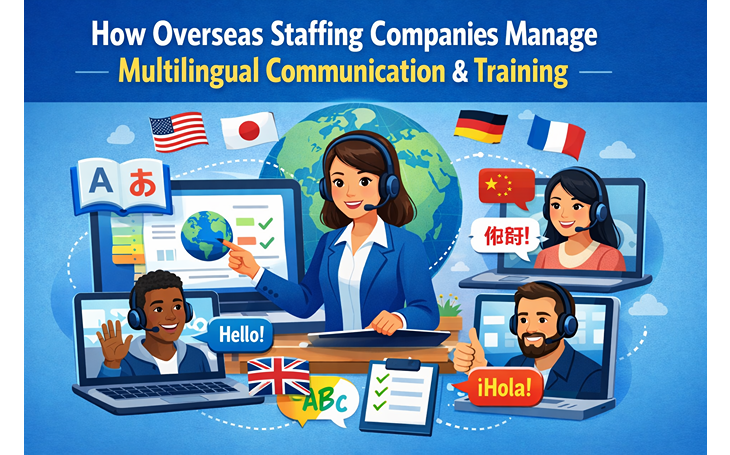
In today’s global workforce, companies are increasingly relying on overseas staffing to fill critical roles. While hiring international talent brings expertise and diversity, it also introduces a significant challenge: multilingual communication. Employees from different linguistic backgrounds may face barriers in understanding instructions, company policies, and training materials, which can impact productivity and retention.
GILS Pvt Ltd specializes in overseas staffing and has extensive experience in managing multilingual communication and training to ensure seamless integration of international employees.
Why Multilingual Communication Matters
Effective communication is the backbone of any successful organization. In overseas staffing, it ensures that:
◾ Employees understand their roles and responsibilities clearly
◾ Safety and compliance guidelines are followed accurately
◾ Training programs are effective and actionable
◾ Team collaboration is smooth despite cultural differences
Without proper multilingual support, misunderstandings can lead to errors, delays, and lower employee satisfaction.
Strategies Used by Overseas Staffing Companies
1. Language Assessment and Matching
◾ Candidates are assessed for language proficiency before deployment
◾ Employees are matched with roles where their language skills meet operational requirements
2. Multilingual Training Materials
◾ Training manuals, safety guidelines, and company policies are provided in multiple languages
◾ Visual aids, diagrams, and video tutorials are used to enhance comprehension
3. Onboarding Programs in Native Languages
◾ Pre-departure and on-site onboarding sessions are conducted in languages familiar to employees
◾ This helps new hires adapt quickly to workplace expectations and cultural norms
4. Continuous Language Support
◾ Access to language learning tools and courses for ongoing improvement
◾ Bilingual supervisors or team leaders facilitate communication and feedback
5. Cultural Sensitivity Training
◾ Employees are trained to understand workplace etiquette and cultural differences
◾ This reduces conflicts and fosters better collaboration among multilingual teams
Benefits of Managing Multilingual Communication Effectively
◾ Improved Productivity: Employees perform tasks accurately when instructions are clear
◾ Higher Retention: Workers feel valued and supported, reducing turnover
◾ Enhanced Safety Compliance: Multilingual safety training prevents workplace accidents
◾ Better Team Cohesion: Cross-cultural understanding strengthens collaboration and morale
How GILS Pvt Ltd Excels
At GILS Pvt Ltd, we understand the challenges of multilingual communication in overseas staffing. Our approach includes:
◾ Pre-Deployment Language Assessment: Ensuring candidates are ready for international roles
◾ Customized Training Programs: Tailored to industry requirements and linguistic needs
◾ Continuous Support and Mentoring: Helping employees adapt and grow in multilingual environments
◾ Cultural Orientation: Preparing workers to integrate smoothly into the host country’s workplace
By focusing on communication and training, GILS Pvt Ltd ensures that overseas employees are confident, competent, and productive from day one.
Final Thoughts
Managing multilingual communication and training is essential for the success of any overseas staffing initiative. Companies that invest in language support and cultural orientation benefit from higher productivity, better retention, and smoother operations.
Partnering with
GILS Pvt Ltd
provides businesses with expertly managed multilingual staffing solutions, ensuring employees are well-prepared to contribute effectively in international roles.
Check us out on
LinkedIn
.