
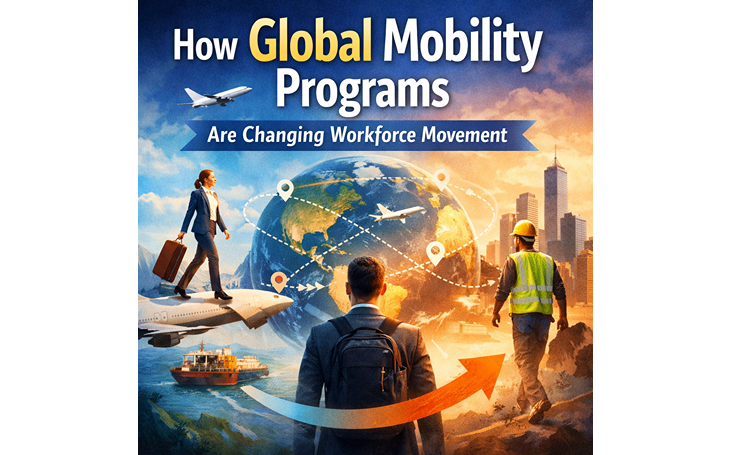
How Global Mobility Programs Are Changing Workforce Movement
Global mobility is shaping the way companies expand, hire and manage their workforce across borders. With businesses operating in multiple countries, the need for structured mobility programs has grown rapidly. These programs help companies move skilled workers smoothly from one location to another while staying compliant with international employment rules.
In the last few years, global mobility has shifted from simple relocation support to an advanced framework that includes compliance management, travel planning, visa processing, cultural training and long term talent planning. This change has opened new opportunities for skilled workers and created better systems for employers.
What Are Global Mobility Programs
Global mobility programs are structured plans used by companies to transfer employees between countries. They cover every stage from identifying the right talent to managing travel, onboarding, legal documents and local compliance.
These programs help companies:
◾ fill talent gaps in new markets
◾ build multicultural teams
◾ support project-based hiring
◾ manage international assignments with minimal risk
Today, mobility programs are used in construction, oil and gas, facility management, IT, manufacturing and event management.
Why Mobility Programs Are Gaining Importance
Workforce movement has become more strategic because companies want the right people in the right place at the right time. Large scale infrastructure projects, new industrial zones, oil and gas expansions and global events require skilled manpower quickly and efficiently.
Mobility programs solve this by offering a structured pathway for international job placements. Countries with talent shortages rely on these programs to fill roles that need specialized skills.
Key Trends Shaping Global Workforce Movement
Several trends are influencing how workers move across borders today:
1. Rise of Project-Based Deployment
Global projects now hire manpower based on project timelines instead of permanent contracts. This makes skill specific deployment more common, especially for technicians, operators and engineers.
2. Focus on Compliance and Worker Protection
Countries are tightening regulations to ensure safe and ethical recruitment. Mobility programs now include checks for:
◾ verified contracts
◾ wage protection rules
◾ safe accommodation
◾ insurance and welfare support
This ensures smooth hiring with lower legal risk.
3. Increased Need for Skilled and Semi Skilled Workers
Sectors like construction, energy and infrastructure need manpower that is trained and ready for on-site deployment. The demand for trades like electrical, plumbing, HVAC, welding and mechanical support continues to grow.
4. Digitalization of the Mobility Process
Companies are now using digital interviews, virtual assessments and online documentation systems. This reduces recruitment time and speeds up worker deployment for urgent project needs.
5. Emphasis on Cultural and Jobsite Readiness
Employers prefer candidates who can adapt easily to new environments. Mobility programs include orientation and cultural awareness training to prepare workers before travel.
How Global Mobility Benefits Workers
For workers, mobility programs create better opportunities with:
◾ transparent job information
◾ smoother documentation
◾ faster deployment
◾ safe and secure work conditions
◾ chances to work in stable industries abroad
This system builds trust and helps workers feel confident about their overseas journey.
How Global Mobility Supports Employers
Companies benefit from mobility programs because they offer:
◾ predictable hiring timelines
◾ structured compliance
◾ reduced recruitment risk
◾ access to verified and trained manpower
◾ support across travel, onboarding and documentation
This makes it easier for companies to scale manpower quickly for large or time-sensitive projects.
How Agencies Like GILS Support Global Mobility
A trusted recruitment partner plays an important role in workforce mobility.
GILS Pvt Ltd
supports global mobility programs through:
◾ candidate sourcing and skill-based screening
◾ verification of worker credentials
◾ coordination of visas, medicals and travel
◾ compliance checks based on client country
◾ orientation and pre-departure support
◾ deployment planning for high volume jobs
This helps employers receive trained manpower on time while ensuring workers experience a safe and structured deployment process.
Conclusion
Global mobility programs are reshaping how companies and workers connect across borders. With better systems for compliance, digital processes and skill-based hiring, workforce movement is becoming more organized and efficient. As global projects grow, mobility programs will continue to support industries that depend on skilled manpower.
Check us out on
LinkedIn
.