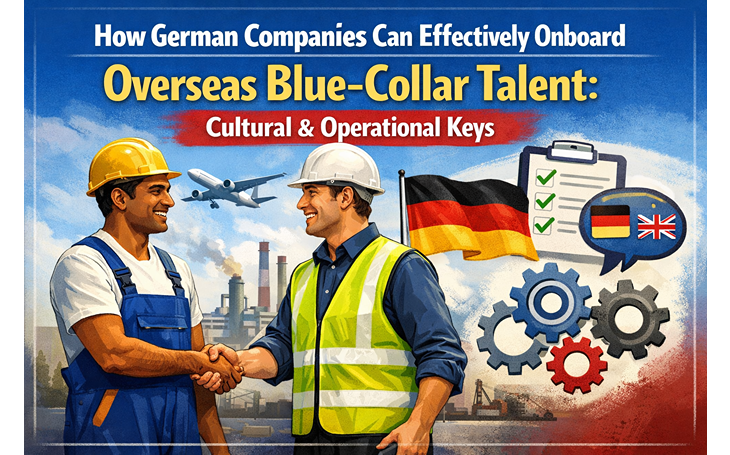
How German Companies Can Effectively Onboard Overseas Blue-Collar Talent: Cultural & Operational Keys
Germany’s industrial strength, rooted in precision, discipline, and productivity, has long depended on a skilled and motivated workforce. But as the nation faces a growing shortage of qualified labour across construction, manufacturing, logistics, and engineering sectors, overseas recruitment has become essential.
Thousands of skilled workers from Asia, Eastern Europe, and the Middle East are now contributing to Germany’s infrastructure and industrial projects. Yet, hiring them is only the first step. The real success lies in how effectively German companies onboard overseas blue-collar workers, helping them integrate both culturally and operationally into the workplace.
This article outlines best practices and strategies for companies leveraging overseas recruitment services and international employment agencies to create smooth, productive, and long-lasting onboarding experiences.
1. Understand the Context: Why Onboarding Matters More Than Ever
Germany’s demographic trends are driving the need for overseas job recruitment. With an ageing population and fewer domestic apprentices entering trade professions, industries are turning to overseas recruitment consultants to fill crucial roles, from welders and electricians to machine operators and logistics staff.
However, effective onboarding isn’t just about administrative orientation. It’s about bridging language, cultural, and operational gaps that can affect safety, efficiency, and morale. When done well, onboarding leads to:
◾ Faster adaptation and productivity.
◾ Lower turnover and absenteeism.
◾ Higher satisfaction among both workers and local teams.
2. Begin the Process Before Arrival
Great onboarding begins long before the worker reaches German soil. Progressive companies collaborate closely with overseas recruitment agencies and abroad job consultancy partners to set clear expectations.
Pre-departure orientation should include:
◾Workplace familiarization - Explaining the company’s structure, safety standards, and daily routines.
◾Cultural briefings - Basic insights into German punctuality, quality standards, teamwork, and communication etiquette.
◾Documentation assistance - Visa procedures, housing information, and emergency contacts.
When manpower deployment starts with transparency, workers arrive prepared, confident, and aligned with company culture.
3. Create a Structured Welcome Program
Upon arrival, companies should design a step-by-step onboarding programme that spans at least the first few weeks. A typical framework may include:
1. Day 1: Welcome session, HR registration, ID cards, facility tour.
2. Week 1: Safety training, equipment handling, introduction to supervisors.
3. Weeks 2–4: Gradual task assignments with mentor guidance and performance feedback.
Using digital tools like onboarding apps or multilingual e-learning platforms can simplify training and track progress. Many international employment services now offer custom onboarding modules that integrate compliance, cultural, and operational learning in one place.
4. Bridge the Language Barrier
Language remains one of the biggest challenges when hiring from abroad. While many overseas workers have technical expertise, limited German proficiency can lead to misunderstandings or safety risks.
Companies can mitigate this by:
◾ Offering basic German language training during pre-departure or onboarding.
◾ Providing visual aids and multilingual safety manuals.
◾ Encouraging bilingual supervisors or interpreters during the first few months.
Investing in communication training demonstrates respect and inclusivity, which boosts worker morale and teamwork.
5. Build Cross-Cultural Awareness Among Local Teams
Successful integration isn’t just the worker’s responsibility; it’s also about how local employees adapt.
Managers and team leaders should receive short intercultural training sessions to understand the backgrounds and communication styles of overseas workers.
For instance:
◾ Workers from South Asia may hesitate to ask direct questions; encourage open dialogue.
◾ Respect for hierarchy is often stronger, so clarify decision-making structures.
◾ Group recognition and feedback can motivate more than individual praise.
When both sides understand each other’s work ethics and expectations, friction reduces, and productivity rises.
6. Pair Workers with Mentors
Assigning workplace mentors, experienced local employees who guide newcomers, can accelerate adaptation dramatically.
A mentor helps the overseas employee:
◾ Navigate technical procedures.
◾ Understand unspoken workplace norms.
◾ Integrate socially within teams.
Mentorship fosters belonging, trust, and confidence, reducing attrition rates and helping maintain a stable, motivated workforce.
7. Prioritize Welfare and Well-being
Moving abroad for jobs abroad is often life-changing. Workers face emotional and logistical challenges, homesickness, cultural adjustment, and new work patterns.
Responsible employers ensure:
◾ Comfortable accommodation near the worksite.
◾ Clear grievance channels and access to healthcare.
◾ Regular feedback sessions to address concerns early.
Partnering with reputable overseas recruitment agencies ensures that welfare policies are compliant with both German and international labour standards.
A focus on well-being doesn’t just fulfil ethical obligations; it improves retention and enhances employer reputation.
8. Streamline Operational Integration
From attendance systems to payroll, operational processes should be digital, transparent, and multilingual.
Implementing easy-to-use platforms for timesheets, leave management, and payments helps build trust and reduce confusion.
Additionally:
◾ Use checklists for compliance, medical insurance, tax registration, and safety certifications.
◾ Establish clear communication channels between HR, site supervisors, and the recruitment agency.
◾ Conduct regular audits of the onboarding process to ensure consistency across multiple project sites.
Efficient systems make manpower deployment smoother and prevent costly administrative errors.
9. Celebrate Diversity and Recognize Effort
Recognition goes a long way in retaining overseas blue-collar talent. Simple gestures, employee-of-the-month programmes, cultural celebration days, or shared meals create emotional connections.
These actions communicate that the company values its international workforce, reinforcing loyalty and long-term collaboration.
10. Collaborate with Experienced Recruitment Partners
Finally, effective onboarding starts with choosing the right recruitment partner. Experienced overseas recruitment consultants not only source skilled manpower but also handle pre-deployment training, compliance checks, and orientation.
At GILS Pvt Ltd, we specialize in overseas recruitment services for blue-collar and technical roles, ensuring that every worker deployed to Germany is thoroughly screened, trained, and prepared for both work and life abroad.
Our integrated international employment services support clients through every stage, from recruitment to onboarding and workforce management, making global hiring efficient, compliant, and human-centred.
Conclusion
For German companies, onboarding overseas blue-collar workers effectively is more than a procedural necessity; it’s a strategic investment. A well-structured onboarding process fosters inclusion, safety, and performance, transforming cultural diversity into operational strength.
By combining clear communication, structured mentorship, and compassionate welfare programmes, companies can build cohesive teams that deliver excellence across every project.
As one of India’s trusted overseas recruitment agencies, GILS Pvt Ltd partners with employers to bridge talent and opportunity, ensuring smooth manpower deployment and successful integration across borders.
If your organization is ready to strengthen its global workforce,
Contact
GILS Pvt Ltd
today, your reliable partner in ethical, efficient, and future-ready overseas recruitment.
Check us out on
LinkedIn
.