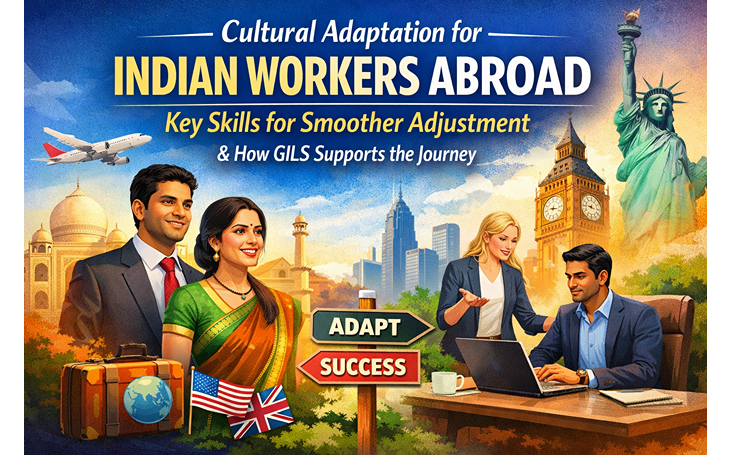
Cultural Adaptation for Indian Workers Abroad : Key Skills for Smoother Adjustment and How GILS Supports the Journey
Working abroad is a life changing opportunity. It opens the door to better income, global work experience, and personal growth. But along with these benefits comes a major challenge that many workers underestimate: cultural adaptation. Every country has its own way of working, communicating, and living. Understanding these differences can help Indian workers settle faster and perform better.
GILS Pvt Ltd prepares candidates for this transition through clear guidance, training, and orientation. Here is a practical look at how Indian workers can build cultural intelligence and adapt smoothly to overseas environments.
1. Understanding Cultural Differences Matters
Every country has its own work habits and social norms. What feels normal in India may be unexpected in another country. Workers who are open minded and willing to learn new customs adjust easily and earn respect from employers.
Common differences include
◾ communication style
◾ punctuality expectations
◾ dress code
◾ food habits
◾ daily routine
◾ interaction with seniors
GILS helps candidates understand these differences during pre departure orientation so they know what to expect from day one.
2. Learning Basic Local Etiquette
A simple greeting, polite gesture, or respectful tone can create a positive first impression. Small mistakes in etiquette may not be serious, but being aware of them helps build trust with colleagues and supervisors.
Helpful practices include
◾ speaking politely and clearly
◾ avoiding loud conversations at the workplace
◾ respecting personal space
◾ using professional greetings
◾ being mindful of cultural sensitivities
GILS shares country specific dos and donts so candidates feel confident while interacting with people abroad.
3. Adapting to Workplace Culture
Work culture varies widely across regions. Gulf countries may focus more on teamwork and discipline. European workplaces may emphasize structure and safety. Southeast Asian companies may expect cooperative behavior and calm communication.
Key expectations across most workplaces include
◾ arriving on time
◾ following safety rules
◾ maintaining cleanliness
◾ respecting supervisors
◾ completing tasks as instructed
◾ keeping a positive attitude
GILS provides orientation on employer expectations to help workers settle quickly into their new roles.
4. Understanding Legal Rules and Worker Rights
Every country has its own labor laws. Knowing these rules protects workers and helps them avoid unnecessary trouble. Workers should know basic legal expectations like
◾ working hours
◾ overtime rules
◾ documentation requirements
◾ accommodation guidelines
◾ local laws on behavior in public
◾ work permit rules
GILS ensures workers receive valid contracts and guidance on legal responsibilities before they travel. This builds confidence and prevents misunderstandings after arrival.
5. Respecting Cultural and Religious Practices
In many countries, cultural and religious traditions shape daily routines. Being respectful of local beliefs creates harmony and strengthens workplace relationships.
Workers should be aware of
◾ prayer times in Gulf countries
◾ national holidays
◾ dress code expectations
◾ rules about public behavior
◾ community norms
GILS covers cultural sensitivity training during the onboarding process so workers know how to behave in public and at work.
6. Building Communication Skills
Clear communication is an important part of cultural adaptation. Even basic English or local language skills can make tasks easier and reduce confusion. Workers should focus on
◾ speaking slowly and clearly
◾ asking questions when unsure
◾ avoiding slang
◾ learning basic workplace terms
GILS helps candidates improve communication through interview preparation and practical guidance.
7. Staying Positive and Open to Learning
Moving abroad brings challenges like homesickness, new food, climate changes, and unfamiliar systems. Staying patient and positive helps workers adjust faster. Most workers find that after a few weeks, they start feeling comfortable and confident.
GILS stays in touch with deployed candidates and provides support whenever needed.
Conclusion
Cultural adaptation is one of the most important parts of working overseas. When Indian workers understand local norms, follow workplace expectations, respect cultural differences, and stay open to learning, they build a strong foundation for success.
GILS Pvt Ltd
makes this transition smoother by offering pre departure orientation, cultural awareness training, contract clarity, and ongoing support. With the right preparation, Indian workers can adjust comfortably, perform well, and build successful international careers.
For anyone planning to work abroad, cultural intelligence is just as important as technical skills, and GILS ensures candidates are ready for both.
Check us out on
LinkedIn
.